East Hill • 28 September 2026

What a Carriage House Really Costs to Build in Vernon

Quick answer: The true cost of a carriage house in Vernon goes well beyond construction. You also need to budget for design and engineering, City permit fees, development cost charges, water and sewer connections, BC home warranty requirements, site work on sloped or treed lots, and financing. Because every East Hill lot is different, get real quotes rather than relying on a per-square-foot rule of thumb.

Carriage houses are one of the most-asked-about projects in East Hill, and for good reason. Under Vernon’s Zoning Bylaw 6000, many serviced lots now allow a detached accessory dwelling. I won’t give you a single price, because construction costs change and every lot is different. What I can do is walk you through where the money goes, so you can build a realistic budget. I’ve built and renovated more than seven homes, and a lot of the cost sits outside the building itself.

1. Design, drawings and professional fees

  • Design drawings from a designer or architect, including site plan, floor plans, elevations and sections.
  • Structural engineering, especially for a garage-with-suite design or a sloped lot.
  • Surveyor’s site plan to confirm setbacks and lot lines.
  • Geotechnical report, if the lot is steep or soil conditions are uncertain, which is not unusual on East Hill.
  • Energy modelling, if needed to show compliance with current energy requirements.

2. City of Vernon permits and fees

You’ll need a building permit, and depending on your lot, possibly a development permit or variance. Vernon’s permit checklist for suites and accessory buildings asks for items like a current title search, dimensioned site plans, design and structural drawings, and proof of home warranty registration with BC Housing for accessory buildings. Permit fees are set in the City’s fees and charges bylaw, so check the current schedule.

Keep in mind that the MUS zone limits accessory dwellings to 8 m (2 storeys) in height. Confirm setbacks and other rules for your specific lot.

3. Development cost charges (DCCs)

DCCs help pay for infrastructure like roads, sewers, water, drainage and parks. In Vernon, the City collects municipal DCCs, and regional DCCs are collected for the Regional District of North Okanagan. Under the City’s interim approach, additional DCCs apply at building permit for new units such as secondary suites. Ask the City for a DCC estimate for your project early, because it can be a significant line item.

4. Servicing: water, sewer, power and gas

  • Water. Water in the Vernon area is supplied by Greater Vernon Water, run by the Regional District of North Okanagan. Ask about connection requirements.
  • Sewer and storm. Ask the City whether you can tie into the existing service or need a new connection, and about storm water management.
  • Electrical. Your existing panel and service may not have enough capacity. An upgrade is a common hidden cost with older East Hill homes.
  • Gas, if you plan to use it.

Distance matters. A carriage house at the back of a deep lot, uphill or downhill from the street, can mean long, costly trenches.

5. Home warranty and builder requirements

A detached carriage house is generally treated as a new home under BC’s Homeowner Protection Act. That usually means using a licensed residential builder and getting home warranty insurance, or qualifying as an owner builder through BC Housing, which has its own requirements and restrictions. Build this into your timeline and budget.

6. Site work and construction

  • Site prep: excavation, retaining walls on sloped lots, tree protection or removal, and access for equipment.
  • Foundation and structure.
  • Envelope: roofing, windows, insulation and siding. On a character street, you may want materials that complement the main house.
  • Mechanical: heating, often a heat pump, plus ventilation and plumbing.
  • Finishes: kitchen, bath, flooring and fixtures. This is where budgets swing the most.
  • Landscaping, paths, parking and fencing once construction is done.

7. The “soft” costs people forget

  • financing costs and interest during construction;
  • builder’s risk and liability insurance;
  • a healthy contingency, especially on older lots;
  • higher property taxes once the unit is assessed.

BC’s provincial Secondary Suite Incentive Program stopped taking new applications on March 31, 2025, so don’t count on that forgivable loan in 2026. Check for any new programs before you start.

This is general information only. Costs and rules change, so get current quotes, confirm requirements with the City of Vernon and BC Housing, and talk to your lender and accountant.

FAQ

Can I build a carriage house on my East Hill lot?

Many serviced lots in Vernon’s MUS zone allow a detached accessory dwelling, but slope, access, setbacks, servicing and heritage status can all affect it. My post on adding a suite or carriage house in East Hill covers the basics.

Do I need a licensed builder for a carriage house in BC?

Generally, a detached carriage house is a new home under the Homeowner Protection Act, so you need a licensed residential builder with home warranty insurance or owner builder authorization from BC Housing.

Does a carriage house add value when I sell?

A permitted carriage house can appeal to buyers looking for rental income or space for family. How much value it adds depends on the market and the quality of the build. See my selling your East Hill home page for more.

If you’re thinking about a carriage house, or looking for an East Hill lot that could take one, I’m happy to talk it through. Call or text me at (250) 550-6979, or browse East Hill homes for sale.

More East Hill reading

Featured photo: stock image from Unsplash, for illustration.

East Hill • 28 September 2026

Winter on East Hill: Steep Streets, Snow and Smart Driveways

Quick answer: East Hill is a hillside neighbourhood, so winter takes a little planning. Know the City of Vernon’s snow-clearing priorities, clear your sidewalk within 24 hours of a snowfall, use proper winter tires, and when you’re buying, pay close attention to how steep the driveway is and which way it faces.

I live on East Hill, and winter here is part of the deal. The hill gives you views over downtown and easy access to everything, but it also means some streets and driveways need extra care from November to March. Here’s a practical guide.

How the City clears the snow

According to the City of Vernon, snow clearing follows three priorities:

  1. First priority: high-traffic roads such as 27th Street, 25th Avenue and Silver Star Road, plus school zones, bus routes and select problem areas.
  2. Second priority: residential roads and priority lanes.
  3. Third priority: lanes and cul-de-sacs.

The City says residential streets can take up to 72 hours to finish after a major storm. It applies magnesium chloride to high-priority streets before and during storms to keep snow from bonding to the pavement.

What that means on East Hill

  • If you live on a quiet side street or cul-de-sac, expect to wait after a big storm. Plan your route to the nearest main road.
  • Streets near Vernon Secondary School and on bus routes tend to be cleared sooner.
  • Steep blocks can stay slick. The heritage register notes 30th Avenue’s top section was once known as “Suicide Hill,” which tells you locals have respected these grades for a long time.

Your responsibilities as an owner

Sidewalks: 24 hours

The City of Vernon requires property owners to clear snow from the sidewalks next to their property within 24 hours after a snowfall. If you don’t, the City may take enforcement action and charge the cost to the owner. On a corner lot, that can mean two sidewalks.

Windrows and driveways

Plows leave windrows, the ridge of snow along the edge of the road. The City says it doesn’t clear windrows from individual driveways, since it serves thousands of properties. Clearing the end of your driveway is on you.

Parking

The City asks residents to move vehicles off streets, cul-de-sacs and lanes once snow starts falling, until roads are cleared. That makes off-street parking valuable on East Hill.

Smart driveways on a hillside

If you’re buying on East Hill, look at the driveway as carefully as the kitchen. Things to check:

  • Slope. A steep driveway that faces the street head-on can be tricky on ice. Try it in winter if you can.
  • Exposure. South- and west-facing driveways get more sun and tend to clear faster. North-facing ones and those under big evergreens can stay icy.
  • Lane access. Some East Hill lots have a back lane. That can mean a flatter approach, but remember lanes are third priority for plowing.
  • Drainage. Meltwater that runs across a driveway and refreezes is a common problem. Look for good grading and drains.
  • Where the snow goes. Is there room to pile it without blocking sightlines or burying the sidewalk?

Upgrades to consider

  • A textured surface instead of smooth concrete;
  • handrails on steep walkways and front steps;
  • better outdoor lighting;
  • heated driveway or walkway systems. These involve electrical work, so get quotes and the right permits.

Around the house

  • Roof and gutters. Older homes with less attic insulation can be prone to ice build-up at the eaves. Better attic insulation and air sealing help.
  • Trees. Heavy snow on mature trees can bring down limbs. Have a certified arborist look at big trees over the house before winter.
  • Steps and porches. Many character homes have tall front steps. Keep them clear, and keep a bin of traction grit handy.

Getting around in winter

BC requires winter tires or chains on many highways, starting October 1. The Province says legal winter tires need at least 3.5 mm of tread and either the M+S (mud and snow) marking or the three-peaked mountain and snowflake symbol, which is recommended for better traction. Check the Province’s designated routes before heading up to SilverStar, which is about 30 minutes from East Hill.

The upside of East Hill in winter: Vernon Jubilee Hospital is just down the hill, downtown is close, and many errands are a short trip. My living in East Hill page covers more about daily life here, and my East Hill FAQ answers common questions.

FAQ

How soon do I have to clear my sidewalk in Vernon?

The City of Vernon requires owners to clear adjacent sidewalks within 24 hours after a snowfall.

Will the City clear the snow at the end of my driveway?

No. The City says windrows are a normal result of plowing and it doesn’t clear individual driveways.

Is East Hill hard to drive in winter?

Some streets are steep, so good winter tires and patience help. Main routes and school zones are cleared first, and side streets can take up to 72 hours after a big storm.

Want help finding an East Hill home that works in every season? Call or text me at (250) 550-6979, or browse East Hill homes for sale.

More East Hill reading

Featured photo: stock image from Unsplash, for illustration.
East Hill • 28 September 2026

How to Win a Multiple-Offer Situation on a Character Home

Quick answer: To win a multiple-offer situation on a character home, be fully prepared before offers are due: get pre-approved, do as much homework on the house as you can up front, and make your offer clean and clear. Think hard before waiving subjects on an older home. The strongest offer isn’t always the highest price.

East Hill’s character homes, some of them over a century old, don’t come up every day, and when a good one does, you may not be the only buyer interested. I’ve been in Vernon real estate for 23 years and have built or renovated more than seven homes. Here’s how to put your best foot forward without taking on risks you don’t understand.

This is general information, not legal or financial advice. Talk to your lender and lawyer about your own situation.

Step 1: Be ready before you fall in love

  • Get a solid pre-approval. Know your limit and what your lender needs to confirm financing quickly.
  • Know your down payment. Have your deposit funds ready to move.
  • Line up your team. Have a licensed home inspector, an insurance broker and a lawyer or notary ready to go on short notice.

Step 2: Do your homework early

Older homes are where subject-free offers get risky. Instead of skipping due diligence, try to do it before offers are due.

  1. Ask for the documents. A Property Disclosure Statement if the seller has one, any past inspection reports, permits and records of upgrades.
  2. Check the heritage register. If the home is listed on the City of Vernon Heritage Register, ask whether it’s also protected by designation or a heritage agreement. The City says protected heritage properties need a Heritage Alteration Permit for exterior work.
  3. Book a pre-offer inspection, if the seller allows it. It costs money even if you don’t win, but it lets you write a cleaner offer with confidence.
  4. Call your insurer. Ask about wiring type, oil tank history and roof age, which often come up on older homes.

My local’s checklist for buying an older home in East Hill lists what to look into.

Step 3: Build an offer the seller can say yes to

Price

Decide your true top number before you write, based on recent comparable sales and what the home will need. Don’t let the pressure of the moment push you past it. The BC Financial Services Authority (BCFSA) warns that overpaying means a higher mortgage and can leave you owing more than the home is worth if values drop.

Subjects

Fewer, shorter subjects can make your offer stronger. If you’ve done your homework up front, you may be able to shorten your subject period or remove some conditions. BCFSA cautions that subject-free offers eliminate your ability to do due diligence before buying. On a character home, that’s a real risk.

Deposit

A meaningful deposit, ready to go, shows you’re serious. Talk to your agent about what’s appropriate.

Dates

Ask what completion and possession dates suit the seller. Flexibility on timing can matter as much as a little more money.

Step 4: Know the rules of the game

  • The rescission period still applies. In BC, buyers of most residential properties have up to three business days after acceptance to cancel for a fee of 0.25% of the price. It can’t be waived.
  • Counter-offers reset the offer. BCFSA notes that when a seller counters, your original offer is rejected, and you can accept, reject or counter again. Your agent can explain how the seller is handling multiple offers.
  • Stay calm. BCFSA advises taking your time and comparing a home with others, even in a competitive market.

Step 5: Be ready to walk away

Character homes are special, and it’s easy to get attached. But there will be other East Hill homes. The right one is the home you can afford to own and maintain, not just the one you can win. Keep an eye on the live East Hill homes for sale search so you’re ready for the next one.

If you’re curious about the neighbourhood’s oldest houses, have a look at East Hill’s 1890s heritage homes on Pleasant Valley Road.

FAQ

Should I waive the inspection to win?

It’s your decision, but on an older home it’s a big risk. A pre-offer inspection, if the seller allows it, is often a better way to strengthen your offer.

Will I find out what the other offers are?

Usually you won’t see the details of other buyers’ offers. Your agent can ask the seller’s agent how the process is being managed.

Does the highest price always win?

No. Sellers also weigh subjects, deposit, dates and how likely the deal is to complete.

Facing competition on an East Hill character home? Call or text me at (250) 550-6979, or browse East Hill homes for sale.

More East Hill reading

Featured photo: stock image from Unsplash, for illustration.
East Hill • 28 September 2026

Buying a Home With a Suite to Help Pay the Mortgage in East Hill

Quick answer: A home with a suite can help cover your mortgage, and the City of Vernon now allows suites and accessory homes on many residential lots. Before you buy, confirm the suite’s permits and safety, ask your lender how they’ll treat the rent, and learn BC’s tenancy and short-term rental rules.

A “mortgage helper” suite is a common goal for buyers, and East Hill is close to downtown, Vernon Secondary School and Vernon Jubilee Hospital, which can make a suite easier to rent. But the suite has to be the real thing, not just a basement with a hot plate. Here’s what to check.

This is general information, not legal, tax or financial advice. Confirm your situation with a lawyer, accountant, lender and the City of Vernon.

What Vernon allows now

Under BC’s small-scale multi-unit housing legislation (Bill 44), the City of Vernon says it now allows small-scale multi-unit housing on lots that used to be zoned for single-detached homes. According to the City:

  • three units are allowed on lots under 280 m², and four units on lots over 280 m²;
  • secondary suites are permitted in single-family homes and duplexes;
  • accessory dwelling units, like garden suites and carriage houses, are allowed.

Zoning is only part of the story. Each property still has to meet the zoning bylaw’s details, the BC Building Code and fire separation rules. My post on adding a suite or carriage house in East Hill covers the city side in more depth.

Is the suite legal and safe?

This is the big one with older East Hill homes. A suite may have been added decades ago, or last year, with or without permits. Ask for:

  1. Permit history. Ask the seller, and check with the City of Vernon for building permits and final inspections.
  2. Safety basics. Smoke alarms, exits, ceiling heights, windows and fire separation between units.
  3. Services. Is there enough electrical capacity and heating for two households? Is there separate laundry?
  4. A licensed home inspection. Ask the inspector to look closely at the suite, not just the main floor.

An unpermitted suite isn’t always a deal-breaker, but it can affect insurance, financing and your costs to bring it up to code. Find out during your subject period, not after. My local’s checklist for buying an older home in East Hill covers the rest of the house.

How lenders look at suite income

Some lenders will count part of a suite’s rent when deciding how much you can borrow. How much they count, and what proof they want, varies by lender and by whether the suite is legal and rented.

  • Talk to your lender or mortgage broker before you write an offer.
  • Bring any existing lease and rent history if the suite is already rented.
  • Don’t assume the listing’s rent figure is what your lender will use.

Buying with a tenant in place

If the suite is rented when you buy, the tenant comes with the house. BC’s Residential Tenancy Act sets the rules on rent increases, notice and ending a tenancy. If you plan to move family into the suite or change things, get advice first. Ask the seller for:

  • a copy of the tenancy agreement;
  • the current rent and deposit amounts;
  • any notices that have been given.

Short-term rentals: know the limits

If you’re thinking of renting the suite nightly instead, check the rules first. The City of Vernon says the provincial principal residence requirement applies in Vernon. A secondary suite or accessory building can be used as a short-term rental only if it’s operated by a principal resident who lives in a home on the same lot.

The City also requires a business licence and provincial registration, and it has rules on guest numbers and parking. Check the current short-term rental regulations on vernon.ca before you run the numbers.

Suites and first-time buyer programs

A suite doesn’t automatically stop you from using BC’s first-time buyer property transfer tax exemption, the FHSA or the RRSP Home Buyers’ Plan. Each program has occupancy and principal residence rules, so confirm how renting part of the home fits before you rely on it.

Finding the right one

I’ve built or renovated more than seven homes, so I know what to look for in how a suite was put together. Homes with suites come and go on the market, and prices change. The live East Hill homes for sale search is the best place to see what’s available, and I’m happy to look into a suite’s history with you.

FAQ

Can I add a suite after I buy?

Often yes, under Vernon’s current rules, but you’ll need permits, and older homes can need upgrades to meet code. Talk to the City of Vernon before you budget for it.

Does a suite increase my property taxes?

A suite can affect your assessed value, which affects your property tax. BC Assessment and the City can explain how it applies to a specific property.

Can I rent both the suite and the main house as short-term rentals?

In Vernon, short-term rentals are tied to the principal residence requirement, so you generally have to live on the property. Check the City’s current rules.

Thinking about an East Hill home with a mortgage helper? Call or text me at (250) 550-6979, or browse East Hill homes for sale.

More East Hill reading

Featured photo: stock image from Unsplash, for illustration.

East Hill • 28 September 2026

Buying a Fixer-Upper in East Hill: Advice From Someone Who’s Built and Renovated 7+ Homes

Quick answer: A fixer-upper on East Hill can be a great way into a walkable, established neighbourhood, but only if you separate cosmetic work from structural and systems work, get real quotes during your subject period, and keep a healthy contingency. Buy the location and the bones; you can change almost everything else.

I bought my first house at 23, and since then I’ve built or renovated more than seven homes. I also work in building and development as part of my real estate practice, and I live on East Hill. This post pulls that together: how to look at a fixer-upper here for what it is today and what it could become.

Why East Hill attracts fixer-upper buyers

  • Location. It’s the hillside right above downtown Vernon, with Vernon Jubilee Hospital just down the hill and Vernon Secondary School near the middle of the neighbourhood.
  • Lots and trees. Established streets, mature trees and a mix of lot sizes.
  • Variety. Houses range from 1890s Victorians to Craftsman bungalows to post-war homes, so there’s a wide range of projects.
  • Future options. Some lots may allow a suite or carriage house, subject to City rules. See my post on adding a suite or carriage house in East Hill.

Cosmetic vs. structural: know which you’re buying

Cosmetic (usually manageable)

  • paint, flooring and light fixtures;
  • kitchen and bathroom updates;
  • landscaping, fences, decks;
  • refinishing original fir floors and trim.

Systems and structure (where budgets blow up)

  • foundation cracks, water in the basement, drainage on a hillside lot;
  • knob-and-tube wiring or an undersized electrical service;
  • galvanized supply pipes and old sewer lines;
  • an old oil furnace or a buried oil tank;
  • roof structure and chimneys;
  • asbestos, vermiculite or lead paint that must be dealt with before work starts.

Neither list is a deal-breaker on its own. The key is knowing which list your house is on before you remove subjects.

Use your subject period well

  1. Home inspection. Attend it, ask questions and look in the crawlspace and attic.
  2. Specialists as needed. Electrician, plumber (with a sewer camera), structural engineer, oil tank scan.
  3. Hazardous materials testing if you plan to open walls, floors or the attic.
  4. Real quotes. Get written estimates for the big items. Guesses aren’t good enough when you’re committing to a price.
  5. Insurance. Confirm with your broker that you can insure the home as-is and during renovation.
  6. City check. Look up heritage status and zoning with the City of Vernon, and ask about permits for your plans.

My local checklist for buying an older East Hill home goes deeper on each of these.

Budgeting the project

  • Do the must-dos first. Water, structure, electrical, plumbing and heat come before finishes.
  • Carry a contingency. Older homes hide things. Build a meaningful buffer into your budget.
  • Sequence the work. Plan so walls get opened once: wiring, plumbing and insulation together, then finishes.
  • Look for help. As of 2026, BC’s Home Renovation Rebate program offers rebates on some energy upgrades like insulation, windows and heat pumps. If the house is on the City’s Heritage Register, it may qualify for City heritage grants. Check current rules before counting on any of it.
  • Talk to your lender early. Ask what financing options exist for a purchase that needs work, and what the lender needs to see.

This is general information. Confirm financing with your lender, contracts with your lawyer, and permits and programs with the City of Vernon and the relevant agencies.

Keep the character

On East Hill, a well-done renovation that keeps the original porch, windows, trim and floors tends to have broad appeal. Update the systems and the kitchen; think twice before removing the details that give the house its personality.

Permits matter

Permitted work protects you when you sell, when you insure and when you refinance. The City of Vernon requires permits for many types of work, including suites, decks and accessory buildings, and electrical and plumbing work have their own permits. If a home you’re buying has had unpermitted work, ask your lawyer and inspector what it could mean for you.

FAQ

Is a fixer-upper on East Hill a good investment?

It can be, depending on the price, the condition and your plans. Prices change, so use the live search and get a current market snapshot rather than relying on old numbers.

What’s the biggest mistake fixer-upper buyers make?

Underestimating the systems and structure work. Get specialist quotes during your subject period, and budget a contingency.

Can I live in the house while I renovate?

Often, if you phase the work. But hazardous materials, major electrical or plumbing work, or a kitchen gut can make it hard. Plan the sequence with your contractor.

Looking for a project on East Hill? Call or text me at (250) 550-6979, or browse East Hill homes for sale.

More East Hill reading

Featured photo: stock image from Unsplash, for illustration.

East Hill • 28 September 2026

BC’s Property Tax Deferment Program: What East Hill Seniors Should Know

Quick answer: BC’s property tax deferment program is a provincial loan that pays your annual property taxes for you, with the balance repaid when you sell or transfer the home. Homeowners 55 and older can qualify if they have at least 25% equity, but as of 2026 new deferrals carry a higher interest rate (prime plus 2%, compounding), so it’s worth doing the math first.

Plenty of East Hill owners have lived in their homes for decades. The house may be worth far more than when you bought it, while your income is fixed. The provincial property tax deferment program was designed for exactly that situation. Here’s how it works in 2026, in plain language.

How the program works

When you’re approved, the Ministry of Finance pays your property taxes to the City of Vernon on your behalf after the tax due date. In exchange, the Province registers a lien on your property. Interest accumulates, and the loan is repaid later, usually when the home is sold.

The program defers property taxes only. Utility charges and other fees still need to be paid as usual.

Who qualifies (regular program)

The regular program is open to homeowners who are:

  • 55 or older during the year, or
  • a surviving spouse of any age, or
  • a person with disabilities, as defined in the program rules.

You also need to:

  • be a Canadian citizen or permanent resident;
  • be a registered owner who has lived in BC for at least one year;
  • have paid all previous years’ property taxes, penalties and interest;
  • live in the home as your principal residence (not a rental or a cabin);
  • have at least 25% equity. All charges on title plus the taxes you want to defer can’t exceed 75% of the assessed value.

There’s also a separate Families with Children program with different rules.

What changed in 2026

This is the part East Hill seniors most need to understand. Under B.C. Budget 2026:

  • Taxes deferred in 2025 and earlier under the regular program keep the old terms: prime minus 2%, simple interest.
  • Taxes deferred in 2026 and later are charged prime plus 2%, compounding monthly, for both the regular and families programs.

Compound interest at prime plus 2% grows faster than the old simple-interest rate, especially over many years. It can still be a sensible tool, but it’s no longer the near-free money it once was.

Fees

The regular program charges a $60 administration fee when you first apply and a $10 renewal fee each year after that.

Applying and renewing

  • Applications and renewals are accepted between May 1 and December 31 each year.
  • You apply online through eTaxBC. Have your roll number and jurisdiction from your tax notice ready.
  • You can set up automatic renewal, as long as you stay eligible.
  • You still need to claim your home owner grant with the City of Vernon every year, separately.
  • If there’s more than one owner on title, each owner has to agree to the terms.

Repayment and selling your home

You can repay all or part of the loan at any time without penalty. The full balance must be repaid when you:

  • sell the property;
  • add someone other than a spouse to title;
  • remove a registered owner (other than a deceased owner);
  • refinance; or
  • subdivide.

When an East Hill home with a deferment is sold, the balance is typically paid out from the sale proceeds on completion, much like a mortgage. Mention any deferment to your REALTOR® and lawyer or notary early so a payout figure can be requested in good time. If you’re getting ready to sell, my selling your East Hill home page covers the rest of the process.

For more local answers, see my East Hill FAQ. Subdivision is also worth noting on East Hill. If you’re thinking about splitting a large lot, the deferment must be paid off first.

Is it right for you?

Questions worth asking yourself and your advisers:

  1. How long do I plan to stay in the home?
  2. How much equity do I want to leave for myself or my estate?
  3. Would a small adjustment to my budget cover the taxes instead?
  4. Am I already getting the home owner grant, including the additional amount for owners 65 and older?
  5. Would downsizing make more sense in the next few years?

This is general information only, based on the Province of BC’s published program rules as of 2026. Rules and rates change, so confirm the details with the Province, your accountant, lender or lawyer before applying.

FAQ

What is the interest rate on BC property tax deferment in 2026?

For taxes deferred in 2026 and later, the rate is prime plus 2%, compounding monthly. Taxes deferred in 2025 or earlier under the regular program stay at prime minus 2%, simple interest.

Can I still sell my East Hill home if I’ve deferred my taxes?

Yes. The deferment balance is typically repaid from the sale proceeds when the sale completes, similar to paying out a mortgage.

Can I defer my water and sewer bills too?

No. The program covers property taxes only. Utility charges must still be paid as usual.

If you’re weighing whether to stay, defer or sell, I’m happy to give you a no-pressure sense of what your home might be worth. Call or text me at (250) 550-6979, or browse East Hill homes for sale.

More East Hill reading

Featured photo: stock image from Unsplash, for illustration.

East Hill • 28 September 2026

BC’s First-Time Home Buyers’ Property Transfer Tax Exemption, Explained for Vernon Buyers

Quick answer: As of 2026, BC’s First Time Home Buyers’ Program can remove property transfer tax on up to the first $500,000 of a qualifying home’s price. The full exemption applies to homes with a fair market value of $835,000 or less, and a partial exemption applies up to $860,000.

Property transfer tax (PTT) is one of the costs that surprises first-time buyers the most. It’s due when your purchase is registered at the Land Title Office, so you need to plan for it in your closing funds. Here’s how the first-time buyer exemption works for Vernon and East Hill buyers.

This is general information, not legal or tax advice. Program rules change, so confirm the current details with your lawyer or notary, your accountant, or the Province of BC.

How property transfer tax works in BC

According to the Province of BC, the general PTT rates are:

  • 1% of the fair market value up to $200,000;
  • 2% of the portion from $200,000 to $2,000,000;
  • 3% of the portion above $2,000,000;
  • plus a further 2% on residential property value over $3,000,000.

Your lawyer or notary files the PTT return and collects the tax when they register the transfer. On a typical home, that adds up to thousands of dollars, which is why the first-time buyer exemption is worth understanding early.

Who qualifies

As of 2026, the Province says that to qualify you must:

  1. be a Canadian citizen or permanent resident;
  2. have lived in BC for at least one year right before the purchase is registered, or have filed at least two income tax returns as a BC resident in the last six tax years;
  3. have never owned a registered interest in a property that was your principal residence, anywhere in the world;
  4. have never received a first-time home buyers’ exemption or refund before.

The “anywhere in the world” rule is the one that trips people up. If you once owned and lived in a condo in another province or country, you likely don’t qualify, even if you’ve rented for years since.

Which homes qualify

For purchases registered on or after April 1, 2024, the thresholds are:

  • Full exemption: fair market value of $835,000 or less. The exemption covers the tax on the first $500,000 of the price.
  • Partial exemption: fair market value over $835,000 and under $860,000. The benefit shrinks as the value rises.

For the full exemption, the property must also be 0.5 hectares (about 1.24 acres) or smaller, be used only as your principal residence, and contain only residential improvements. Larger lots, or properties with other buildings, may only get a partial exemption.

That size rule rarely matters on a typical East Hill city lot, but it can on a rural or acreage property outside town. Check the current rules on gov.bc.ca.

The move-in rules

The exemption isn’t just about the day you buy. To keep it, you must:

  • move into the home within 92 days of the date it’s registered; and
  • live there continuously as your principal residence until the first anniversary of registration.

If you plan to rent the whole house out right away, or you won’t be moving in within that 92-day window, talk to your lawyer before you rely on the exemption. You may have to repay some or all of it.

What it means in East Hill

East Hill has a mix of older character homes, homes with suites and smaller properties. Whether a particular home falls under the thresholds depends on its value at the time you buy, and prices change. I won’t guess at numbers here. The live East Hill homes for sale search shows current listings, and I can pull recent sales for any home you’re considering.

A few practical tips:

  • Buying with a partner: the exemption is worked out for each buyer. If one of you has owned a home before and the other hasn’t, the exemption may only apply to part of the purchase. Ask your lawyer to run the numbers.
  • Homes with suites: a suite doesn’t automatically disqualify a home, but the principal residence rules still apply. Ask how your situation fits before you write an offer. My post on suites and carriage houses in East Hill covers the city side.
  • Stack your savings: the PTT exemption can work alongside the federal FHSA and RRSP Home Buyers’ Plan. Canada.ca says you can use both of those for the same qualifying home if you meet the conditions for each.
  • Budget for the house, too: money saved on PTT can go toward repairs. If you’re looking at an older home, my local’s checklist for buying an older home in East Hill is worth a read.

FAQ

Do I apply for the exemption separately?

It’s normally claimed on the property transfer tax return that your lawyer or notary files when your purchase is registered. Make sure they know you’re a first-time buyer well before closing.

What if I’ve owned a home before but never lived in it?

The rule is about owning a home that was your principal residence. If you owned property you never lived in, you may still qualify. Confirm your situation with your lawyer or the Province.

Are the thresholds the same everywhere in BC?

Yes. The $835,000 and $860,000 thresholds apply province-wide as of 2026, but they can change. Check gov.bc.ca for the current figures.

Want to know which East Hill homes might fit the exemption, or how it fits your budget? Call or text me at (250) 550-6979, or browse East Hill homes for sale.

More East Hill reading

Featured photo: stock image from Unsplash, for illustration.
East Hill • 28 September 2026

Asbestos, Vermiculite and Lead Paint: What to Know Before Renovating an Older Home

Quick answer: Older homes on East Hill may contain asbestos, vermiculite insulation and lead-based paint. They’re generally not a hazard when left undisturbed, but renovation can release dust and fibres. Test before you start, and hire licensed professionals for asbestos removal.

Many homes on East Hill were built before 1990, and plenty of them long before that. That’s part of the charm. It also means any renovation, even a small one, should start with a simple question: what’s in these walls, floors and attics?

Asbestos

Where it’s found

Health Canada says asbestos was widely used in construction before 1990. In older homes it may be found in:

  • siding, cement and plaster;
  • floor and ceiling tiles;
  • roofing shingles and tar paper;
  • some paints, putty and caulking;
  • insulation around pipes, boilers and tanks.

WorkSafeBC notes asbestos has been found in more than 3,000 household materials. You can’t tell by looking; a lab test is the only way to know.

When it’s a concern

According to Health Canada, asbestos poses no significant health risk if it’s left undisturbed or properly sealed. The risk comes when drilling, sawing, sanding or demolition releases fibres into the air.

What to do

  • Get your home tested before a renovation or demolition project, as WorkSafeBC advises.
  • Don’t remove asbestos yourself. Health Canada recommends using a qualified removal specialist.
  • Since January 1, 2024, asbestos abatement employers in BC must be licensed by WorkSafeBC, and their workers must be certified. You can check the Asbestos Abatement Licence Registry on worksafebc.com.

Vermiculite insulation

What it is

Vermiculite is a loose, pebble-like insulation, usually greyish-brown or gold, often found poured into attics or between wall studs. Health Canada says most vermiculite insulation came from a mine in Libby, Montana, that operated from the 1920s to 1990 and was often sold as Zonolite. That ore could contain asbestos.

What Health Canada advises

  • Not all older vermiculite contains asbestos, but treat it as if it might.
  • Don’t disturb it. Health Canada says there’s no evidence of risk if it stays sealed behind walls or isolated in the attic.
  • Seal gaps and cracks around light fixtures and attic hatches.
  • Don’t try to remove it yourself. If renovation will disturb it, hire trained professionals.

This one matters a lot if you’re planning an attic insulation upgrade or a heat pump installation that runs through the attic.

Lead-based paint

Which homes may have it

Health Canada says homes built before 1960 likely contain lead-based paint. Homes from 1960 to 1990 may have it on exterior surfaces. By 1990, consumer paint in Canada was virtually lead-free.

Why it matters

Lead exposure can cause serious health effects, and children are at the greatest risk. Old paint on windows, doors, trim and porches is especially likely to wear or chip.

What to do

  • Health Canada notes that leaving lead paint alone can sometimes be safer than removing it, as long as it isn’t chipping or within reach of children.
  • Don’t use sanders or heat guns, which create toxic dust and fumes.
  • Hire a professional where possible.
  • Keep children and pregnant people away from the work area.
  • Dispose of waste according to local guidelines.

A simple pre-renovation plan

  1. Identify the age of the house and of any past additions or renovations.
  2. Book a hazardous materials test for the areas you’ll be disturbing.
  3. Adjust the plan and budget based on the results.
  4. Hire licensed abatement for asbestos before other trades start.
  5. Keep the paperwork. Test results and abatement reports are useful for future buyers and insurers.

If you’re planning a bigger project, my post on adding a suite or carriage house in East Hill and my older-home buying checklist are good next reads.

This is general information, not health or legal advice. Follow guidance from Health Canada and WorkSafeBC, and use qualified professionals for testing and removal.

Buying or selling

If you’re buying an older East Hill home and plan to renovate, consider testing as part of your due diligence so you can budget with real numbers. If you’re selling and have test results or abatement records, share them; they answer questions before buyers ask.

FAQ

Is it safe to live in a home with asbestos?

Health Canada says asbestos materials pose no significant health risk if they’re left undisturbed or sealed. The risk comes when they’re damaged or disturbed.

Can I remove vermiculite from my attic myself?

Health Canada advises against it. Leave it undisturbed, and hire trained professionals if renovation will disturb it.

How do I know if my paint contains lead?

Assume paint in a pre-1960 home may contain lead, and have it tested before sanding, scraping or stripping.

Planning to buy and renovate on East Hill? Call or text me at (250) 550-6979, or browse East Hill homes for sale.

More East Hill reading

Featured photo: stock image from Unsplash, for illustration.

East Hill • 28 September 2026

Aging in Place in an Older East Hill Home: Renovations That Help

Quick answer: Most older East Hill homes can be made much easier to live in with a handful of targeted changes: safer entries and stairs, a main-floor bedroom and bathroom, a walk-in shower, grab bars and better lighting. BC also has a renovation tax credit for seniors and a rebate program for lower-income households with a disability that can help with the cost.

A lot of East Hill homes were built long before anyone talked about “aging in place.” Stairs up to the porch, narrow doorways, bathrooms upstairs and steep driveways are common. I’ve built and renovated more than seven homes over the years, and older houses can almost always be adapted. The trick is to spend on the changes that matter most for daily life.

Start with how you actually use the house

Before calling a contractor, walk through a normal day and note every spot that’s awkward or risky. Common trouble spots in older East Hill homes include:

  • the front steps and porch, especially in winter;
  • a single full bathroom on the second floor;
  • steep, narrow basement stairs to the laundry;
  • tubs with high sides;
  • dim hallways and stairwells;
  • round doorknobs and old taps that are hard to grip.

That list usually points straight to your priorities.

Renovations that make the biggest difference

Entries and stairs

  • Sturdy handrails on both sides of every staircase, inside and out.
  • Non-slip treads and good exterior lighting at the front steps.
  • A second, easier entry, such as a side or back door closer to parking.
  • Where the lot allows, a ramp or a gentler path to the door.

Main-floor living

The single most useful change in a two-storey character home is often creating a bedroom and full bathroom on the main floor. A dining room, den or back porch can sometimes be converted. This is also the change that tends to need permits, so plan it carefully.

Bathrooms

  • A low-threshold or wheel-in shower in place of a tub.
  • Grab bars properly anchored into framing, not just drywall.
  • A comfort-height toilet and a hand-held shower head.
  • Lever-style taps and non-slip flooring.

Everyday details

  • Lever door handles instead of knobs.
  • Brighter, even lighting, with switches at both ends of halls and stairs.
  • Moving laundry up from the basement if space allows.
  • Widening key doorways if a walker or wheelchair is likely.

Older-home issues to deal with at the same time

If you’re opening walls anyway, it’s a good time to look at the bones of the house. Older Vernon homes can have original wiring, older plumbing, or aging heating systems. Dealing with these during an accessibility renovation can save money and disruption later. My post on buying an older home in East Hill lists the common items to check.

If your home is on the City of Vernon’s Heritage Register or is a protected heritage property, talk to the City before changing the exterior. Protected heritage properties need a Heritage Alteration Permit for exterior work.

Programs that can help pay for it (as of 2026)

BC home renovation tax credit for seniors and persons with disabilities

This refundable provincial credit is 10% of eligible renovation costs, up to $10,000 of expenses per year, for a maximum credit of $1,000. It’s available to BC residents 65 or older, people who qualify for the disability tax credit, and family members who live with them. Eligible work includes things like grab bars, walk-in tubs, wheel-in showers, ramps, widened doorways, lever handles and raised toilets. General items like appliances, regular flooring and heating systems don’t qualify.

BC Rebate for Accessible Home Adaptations (BC RAHA)

BC Housing’s BC RAHA program offers up to $20,000 for eligible home adaptations for lower-income households where someone has a permanent disability or loss of ability. You need approval before work starts, and some adaptations need an assessment from an occupational or physical therapist first.

Help with property taxes

Owners 65 and older can apply for a higher home owner grant, and owners 55 and older may qualify for the provincial property tax deferment program. The deferment interest terms changed for 2026, so read the current rules carefully.

This is general information only. Confirm eligibility and current amounts with the Province of BC, BC Housing, your accountant or your lawyer before you start work.

Permits and planning

Grab bars and lever handles don’t need a permit. Moving walls, adding a bathroom, changing plumbing or building a ramp might. Check with the City of Vernon’s building department before you start, and keep copies of permits and receipts. They help with tax credits now and with resale later.

FAQ

Can a two-storey character home work for aging in place?

Often, yes. The key is usually creating a main-floor bedroom and full bathroom, then adding handrails, better lighting and a safer entry.

How much is the BC seniors’ renovation tax credit?

As of 2026 it’s 10% of up to $10,000 in eligible accessibility renovation costs per year, for a maximum refundable credit of $1,000.

Should I renovate or sell?

It depends on the house, your budget and your health. If the changes needed are major, it’s worth comparing renovation costs with a move to a rancher or townhome. My East Hill FAQ has more on what’s available nearby.

Whether you’re adapting your current home or weighing a move, I’m glad to talk it through. Call or text me at (250) 550-6979, or browse East Hill homes for sale.

More East Hill reading

Featured photo: stock image from Unsplash, for illustration.
East Hill • 27 September 2026

Queen Anne, Craftsman, Foursquare: Spotting Architectural Styles on East Hill

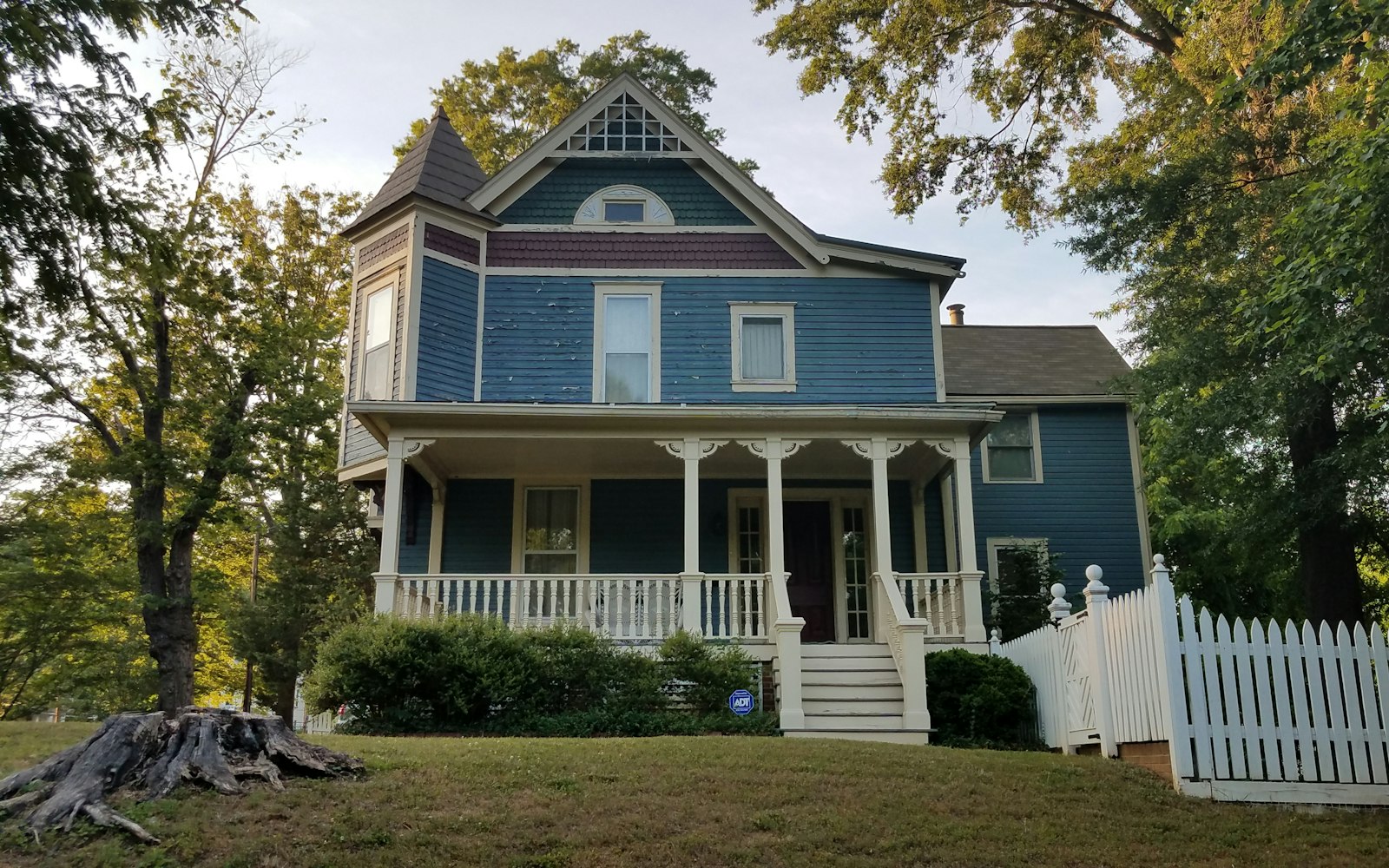
Quick answer: East Hill’s older homes mostly fall into a few families: 1890s Queen Anne Revival houses with towers and fish-scale shingles, early-1900s Edwardian Foursquares (“classic boxes”), Arts and Crafts and Craftsman bungalows from the 1910s and 1920s, and simpler post-war homes. Once you know the clues, you can date a street just by walking it.

One of the things I enjoy about living on East Hill is how many eras sit side by side. The City of Vernon Heritage Register is a great field guide. It describes dozens of local homes by style, and I’ve used its examples below so you can go see them for yourself (from the sidewalk, please; these are private homes).

Queen Anne Revival (1890s to about 1910)

The register says this American style was popular in the Okanagan from the early 1890s to around 1910. It fits the moment when East Hill was first becoming the fashionable place to build.

How to spot it

  • Asymmetrical shape, often with a dominant front-facing gable;
  • towers or turrets, sometimes with a conical roof;
  • a mix of surfaces, such as drop siding with bands of fish-scale shingles;
  • wraparound verandas with turned posts, spindle work and decorative brackets;
  • bay windows.

Where to see it

  • Campbell House (2203 30th Avenue, 1898): the landmark at the top of 30th Avenue, with its corner tower and conical turret. It’s a designated heritage site.
  • The Megaw and McNair houses on Pleasant Valley Road (1890s): both described as “free classic” Queen Anne.
  • The first Crowell House on 27th Street (1893): a spindle-work Queen Anne built by T. E. Crowell, one of Vernon’s early builders.

Edwardian Foursquare or “classic box” (about 1900 to 1911)

After Victorian complexity came calm and symmetry. The register notes this four-square style, with a low bell-cast hipped roof, was a common urban style in BC from 1900 to around 1911.

How to spot it

  • Two storeys on a square or nearly square plan;
  • a hipped roof, often with flared (“bell-cast”) eaves and hipped dormers;
  • a full-width front porch;
  • balanced, symmetrical windows.

Where to see it

  • The Owens House (2000 37th Avenue, 1909) in the old Hillhead subdivision, which the register calls Vernon’s best example of the Edwardian Georgian Revival style.
  • The second Crowell House (1800 32nd Avenue, 1910) in the Lakeview subdivision: a brick foursquare built with Vernon brick, since Crowell owned the local brickyard.

Arts and Crafts and Craftsman (1910s to 1920s)

The register says local styles turned toward Edwardian and Arts and Crafts design after the First World War, including the California bungalow. You’ll find many of these smaller homes tucked between the grand older houses.

How to spot it

  • Low-pitched roofs with wide overhangs and exposed rafters or brackets;
  • one or one-and-a-half storeys, often with a shed or gabled dormer;
  • tapered porch columns on solid bases;
  • natural materials: shingles, stucco, fieldstone;
  • inside, fir paneling, built-ins and inglenooks.

Where to see it

The Spinks-Ellison House (2159 36th Avenue, 1894) is an earlier, grander take on Arts and Crafts design, by Vancouver architect R. M. Fripp. The register describes it as an English Arts and Crafts country house above Pleasant Valley Road. A 1932 fire changed its roofline.

Other styles you’ll run into

  • Second Empire: the Mohr House (2301 32nd Avenue, 1893), on a corner of Pleasant Valley Road, is described as Vernon’s only high-style Second Empire home. Look for the mansard roof and dormers.
  • Colonial Revival: the S. C. Smith House (1705 32nd Avenue) is called Vernon’s most important Colonial Revival villa, with a gambrel roof and Tuscan columns.
  • Tudor Revival: the Nagle house (2205 28th Avenue, 1914) mixes Tudor, shingle and Craftsman touches. The register calls it a landmark at the highest point on East Hill.
  • Post-war homes: the register notes the “100 homes” built on East Hill after the Second World War to ease a housing shortage. These simpler houses are a big part of the neighbourhood today.

Why style matters when you buy

Style gives you a rough age, and age tells you what to check: original wiring, older plumbing, foundations and windows. It also guides good renovation choices, since the best updates respect the original design. If you’re shopping, my local checklist for buying an older East Hill home is a good next read, and living in East Hill gives you the bigger neighbourhood picture.

FAQ

Where can I read more about specific East Hill houses?

The City of Vernon Heritage Register (a free PDF on vernon.ca) has descriptions and, for some homes, full statements of significance. The Vernon Museum is another great resource.

Are these houses open to the public?

Most are private homes, so enjoy them from the street. The Caetani Cultural Centre on Pleasant Valley Road offers guided and self-led heritage tours of its house and grounds.

Is a house with a lot of original detail harder to insure or renovate?

It can take more planning. Match materials where you can, check whether the home has heritage status, and talk to an insurance broker who knows older homes.

Looking for a home with real character? Call or text me at (250) 550-6979, or browse East Hill homes for sale.

More East Hill reading

Featured photo: stock image from Unsplash, for illustration.