

 Facebook
 X
X
 Pinterest
 Copy Link
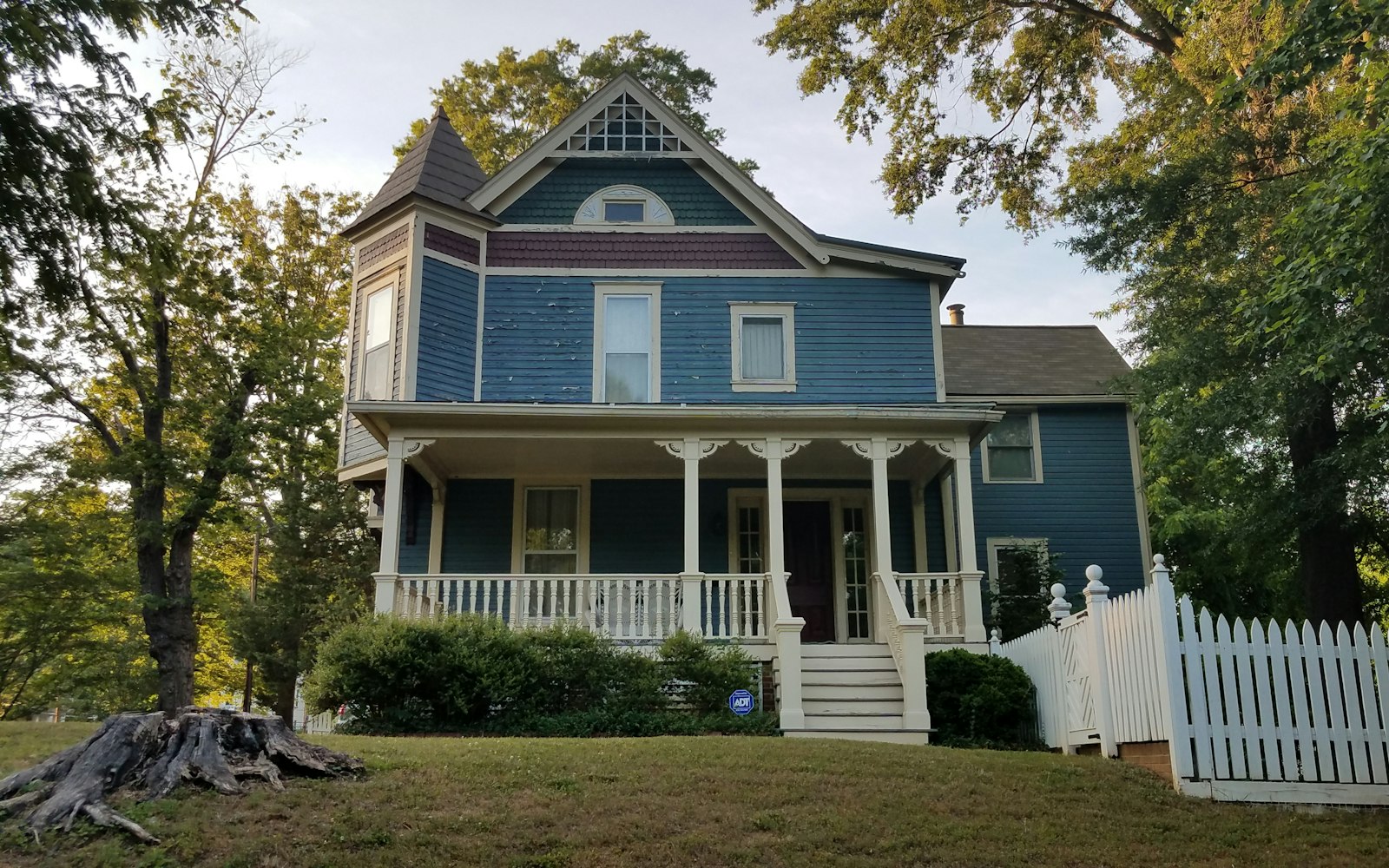
Quick answer: East Hill’s older homes mostly fall into a few families: 1890s Queen Anne Revival houses with towers and fish-scale shingles, early-1900s Edwardian Foursquares (“classic boxes”), Arts and Crafts and Craftsman bungalows from the 1910s and 1920s, and simpler post-war homes. Once you know the clues, you can date a street just by walking it.
One of the things I enjoy about living on East Hill is how many eras sit side by side. The City of Vernon Heritage Register is a great field guide. It describes dozens of local homes by style, and I’ve used its examples below so you can go see them for yourself (from the sidewalk, please; these are private homes).
Queen Anne Revival (1890s to about 1910)
The register says this American style was popular in the Okanagan from the early 1890s to around 1910. It fits the moment when East Hill was first becoming the fashionable place to build.
How to spot it
- Asymmetrical shape, often with a dominant front-facing gable;
- towers or turrets, sometimes with a conical roof;
- a mix of surfaces, such as drop siding with bands of fish-scale shingles;
- wraparound verandas with turned posts, spindle work and decorative brackets;
- bay windows.
Where to see it
- Campbell House (2203 30th Avenue, 1898): the landmark at the top of 30th Avenue, with its corner tower and conical turret. It’s a designated heritage site.
- The Megaw and McNair houses on Pleasant Valley Road (1890s): both described as “free classic” Queen Anne.
- The first Crowell House on 27th Street (1893): a spindle-work Queen Anne built by T. E. Crowell, one of Vernon’s early builders.
Edwardian Foursquare or “classic box” (about 1900 to 1911)
After Victorian complexity came calm and symmetry. The register notes this four-square style, with a low bell-cast hipped roof, was a common urban style in BC from 1900 to around 1911.
How to spot it
- Two storeys on a square or nearly square plan;
- a hipped roof, often with flared (“bell-cast”) eaves and hipped dormers;
- a full-width front porch;
- balanced, symmetrical windows.
Where to see it
- The Owens House (2000 37th Avenue, 1909) in the old Hillhead subdivision, which the register calls Vernon’s best example of the Edwardian Georgian Revival style.
- The second Crowell House (1800 32nd Avenue, 1910) in the Lakeview subdivision: a brick foursquare built with Vernon brick, since Crowell owned the local brickyard.
Arts and Crafts and Craftsman (1910s to 1920s)
The register says local styles turned toward Edwardian and Arts and Crafts design after the First World War, including the California bungalow. You’ll find many of these smaller homes tucked between the grand older houses.
How to spot it
- Low-pitched roofs with wide overhangs and exposed rafters or brackets;
- one or one-and-a-half storeys, often with a shed or gabled dormer;
- tapered porch columns on solid bases;
- natural materials: shingles, stucco, fieldstone;
- inside, fir paneling, built-ins and inglenooks.
Where to see it
The Spinks-Ellison House (2159 36th Avenue, 1894) is an earlier, grander take on Arts and Crafts design, by Vancouver architect R. M. Fripp. The register describes it as an English Arts and Crafts country house above Pleasant Valley Road. A 1932 fire changed its roofline.
Other styles you’ll run into
- Second Empire: the Mohr House (2301 32nd Avenue, 1893), on a corner of Pleasant Valley Road, is described as Vernon’s only high-style Second Empire home. Look for the mansard roof and dormers.
- Colonial Revival: the S. C. Smith House (1705 32nd Avenue) is called Vernon’s most important Colonial Revival villa, with a gambrel roof and Tuscan columns.
- Tudor Revival: the Nagle house (2205 28th Avenue, 1914) mixes Tudor, shingle and Craftsman touches. The register calls it a landmark at the highest point on East Hill.
- Post-war homes: the register notes the “100 homes” built on East Hill after the Second World War to ease a housing shortage. These simpler houses are a big part of the neighbourhood today.
Why style matters when you buy
Style gives you a rough age, and age tells you what to check: original wiring, older plumbing, foundations and windows. It also guides good renovation choices, since the best updates respect the original design. If you’re shopping, my local checklist for buying an older East Hill home is a good next read, and living in East Hill gives you the bigger neighbourhood picture.
FAQ
Where can I read more about specific East Hill houses?
The City of Vernon Heritage Register (a free PDF on vernon.ca) has descriptions and, for some homes, full statements of significance. The Vernon Museum is another great resource.
Are these houses open to the public?
Most are private homes, so enjoy them from the street. The Caetani Cultural Centre on Pleasant Valley Road offers guided and self-led heritage tours of its house and grounds.
Is a house with a lot of original detail harder to insure or renovate?
It can take more planning. Match materials where you can, check whether the home has heritage status, and talk to an insurance broker who knows older homes.
Looking for a home with real character? Call or text me at (250) 550-6979, or browse East Hill homes for sale.
More East Hill reading
- Selling an East Hill Home in Winter
- Mature Trees and Big Gardens: Caring for an East Hill Lot
- Moving From the Lower Mainland to Vernon: Why East Hill Makes Sense
Featured photo: stock image from Unsplash, for illustration.
